Next Generation Sequencing (NGS) is a powerful DNA-based testing technique that enables the identification of multiple of species from a single sample. Unlike targeted methods that look for specific species, NGS can provide a broad overview of the biological material present, making it particularly valuable for food authenticity investigations, species identification and food fraud detection.
Food Forensics offers UKAS-accredited NGS analysis to support manufacturers, retailers, importers and food service businesses in understanding the composition of complex food products and raw materials.
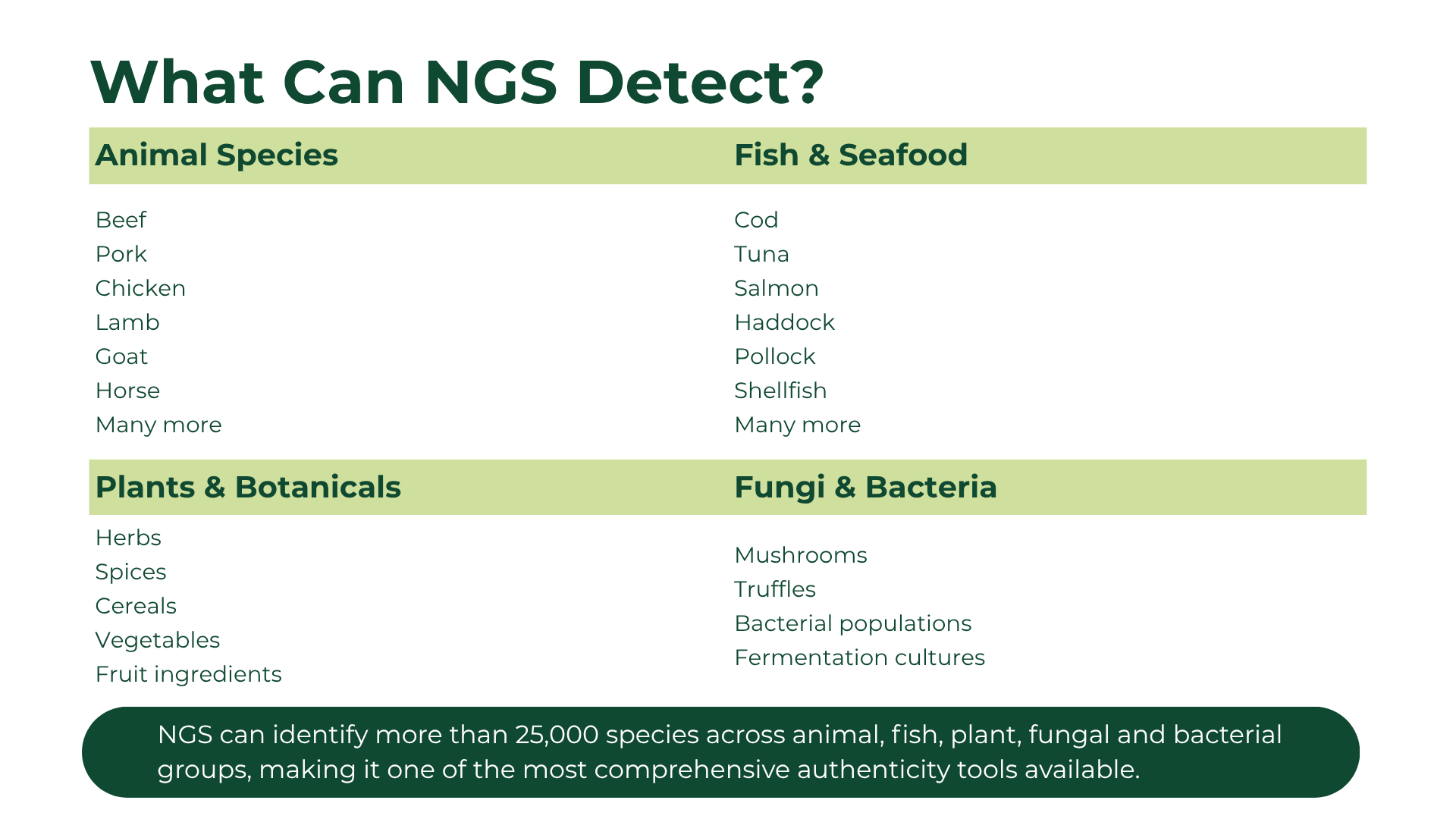
25,000+ species detectable Animal, fish, plant, fungal and bacterial identification Suitable for processed and complex food products Supports food fraud investigations UKAS accredited analysis |
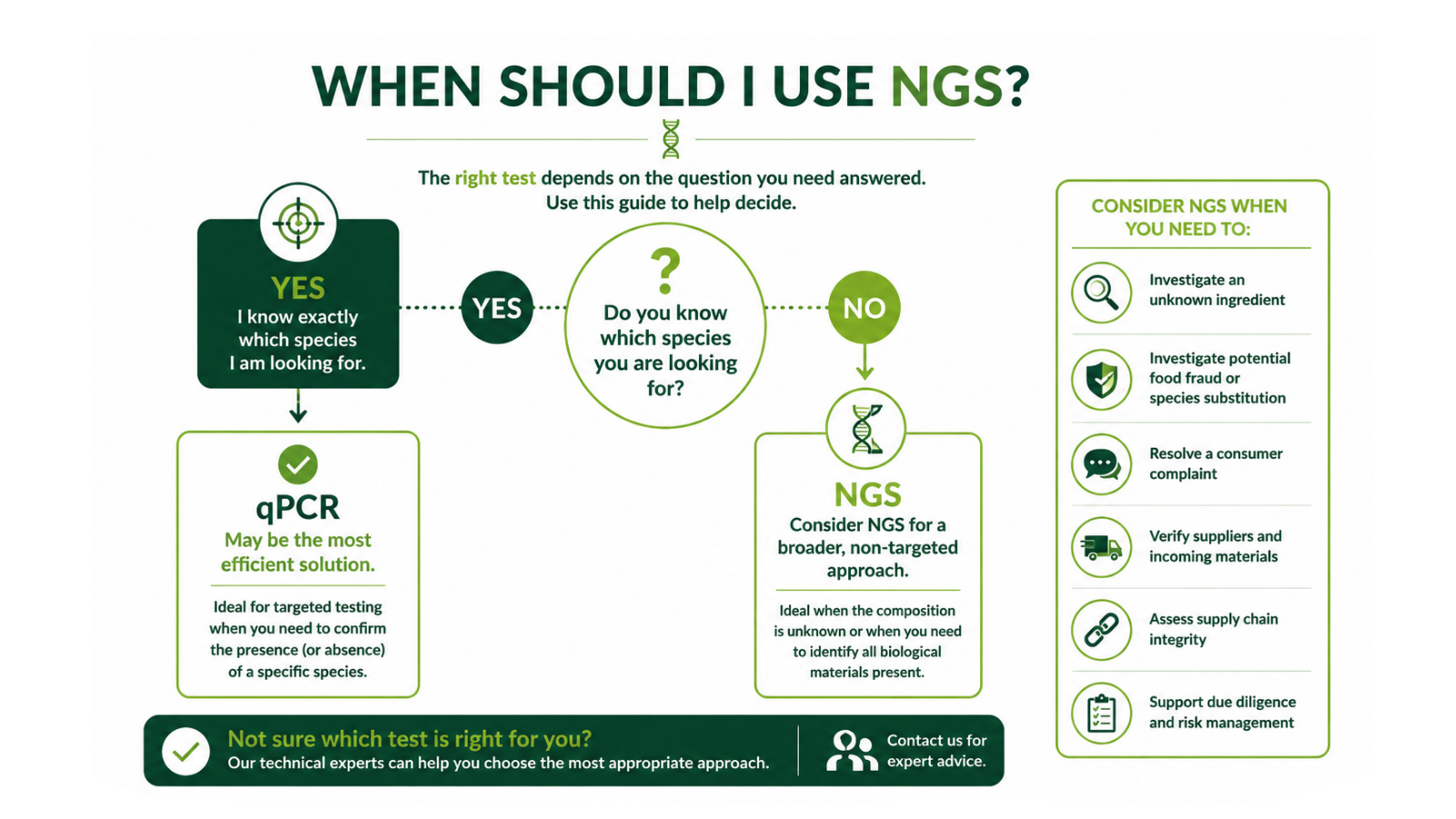
Both NGS and qPCR are powerful DNA testing techniques, but they are designed to answer different questions. qPCR is ideal when you know exactly which species you are looking for, whereas NGS provides a broader, non-targeted approach capable of identifying unexpected ingredients and species.
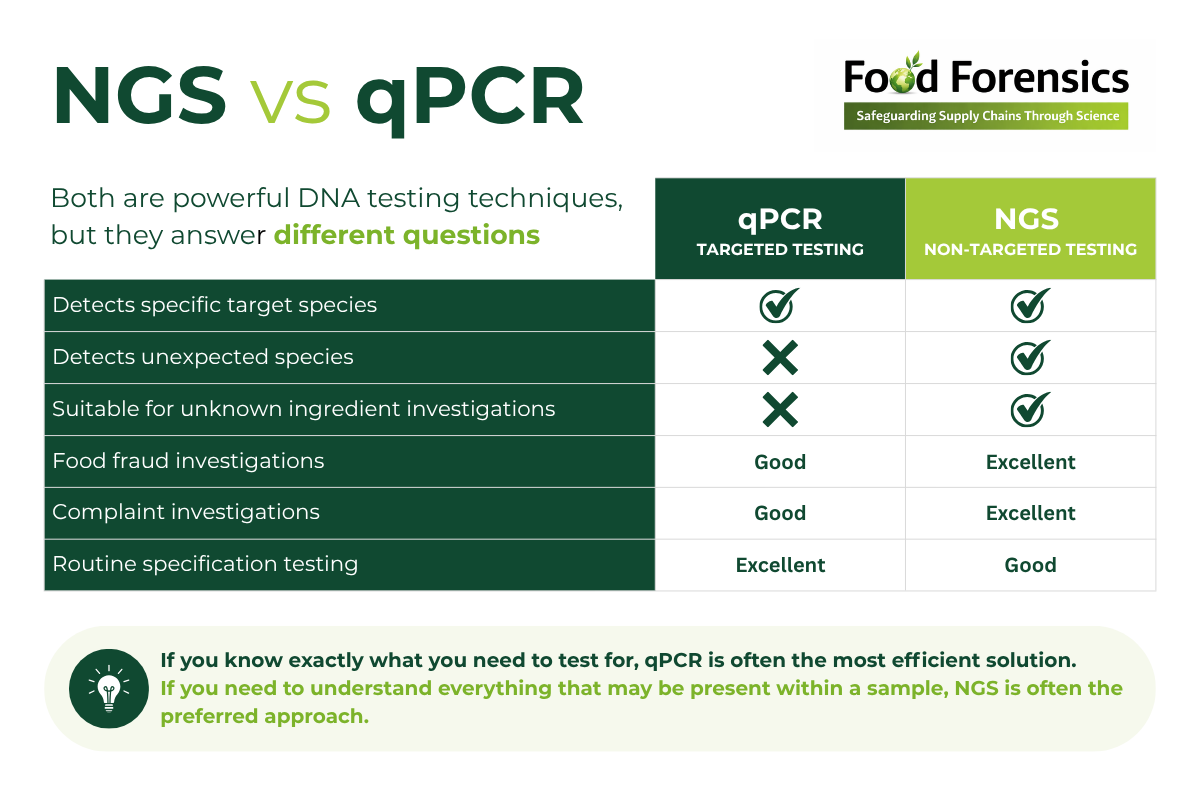
NGS is particularly useful when the composition of a sample is unknown, when investigating potential food fraud or when a broad understanding of all biological materials present is required.
|
|
Food Fraud InvestigationsInvestigate species substitution, adulteration and undeclared ingredients. |
Consumer ComplaintsIdentify unexpected ingredients and support root-cause investigations. |
Supplier VerificationVerify the authenticity of incoming raw materials and products. |
Due Diligence & Risk ManagementSupport VACCP programmes and strengthen supply chain assurance. |
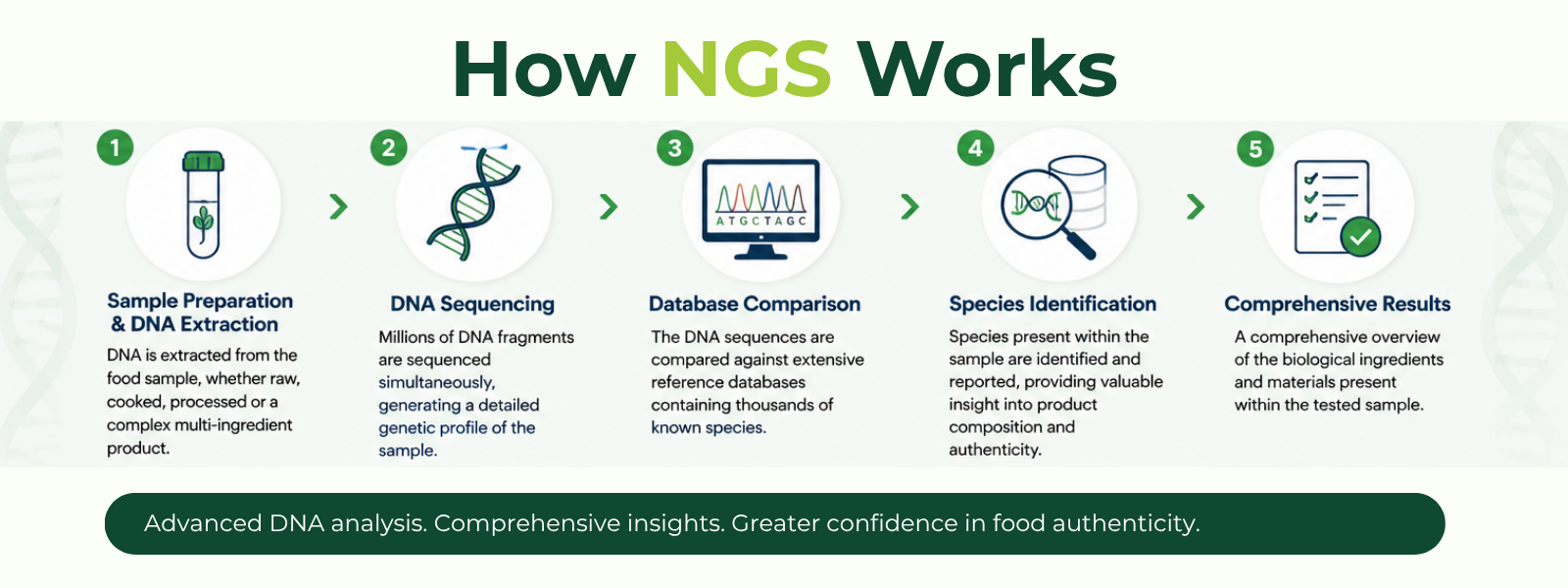
NGS works by extracting DNA from a sample, sequencing genetic material and comparing the resulting data against reference databases to identify the species present. This allows complex mixtures to be analysed and provides valuable insight into product composition.
25,000+ Species Detectable. One Test. Thousands of Possibilities.
Advantages of NGS
|
Understanding the Limitations
|
Food Forensics combines scientific expertise with practical food supply chain knowledge to help clients select the most appropriate testing strategy for their objectives. Our technical team can advise on whether NGS, qPCR or a combination of analytical approaches is most suitable for your investigation.
We support manufacturers, retailers, importers, food service operators and regulatory bodies with food authenticity testing, food fraud investigations and supply chain assurance programmes.
Speak to a Technical AdvisorNot sure whether NGS is the right approach for your product or investigation? Our technical team can help determine the most suitable testing strategy based on your objectives and the questions you need answered. |
